
Portion Control
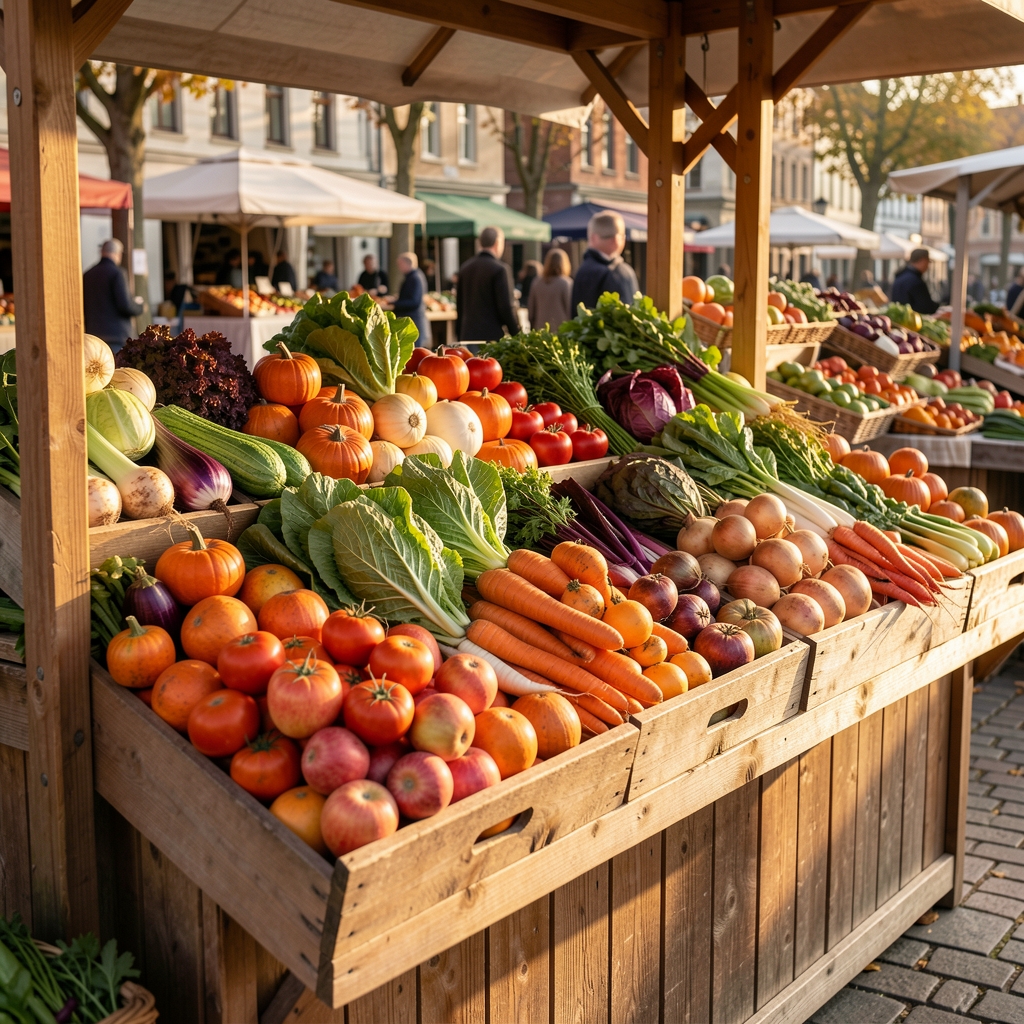
The produce available in a given week is not an arbitrary fact of the shopping list. It is, in most cases, a direct record of what the current season makes accessible at a reasonable cost and acceptable quality. This observation — straightforward enough on its surface — has meaningful implications for how a balanced meal is composed across a calendar year, and how the dietary patterns of those who cook at home shift, often without deliberate intention, in response to seasonal change.
Nutritional composition in vegetables is not fixed across harvest periods. The fibre content of a courgette picked in August and one stored for three months before sale differs in ways that are documented in published agricultural research. The gap is not always large enough to alter a weekly dietary assessment, but it is consistent, and it accumulates across a year of eating. Those who maintain a close relationship with seasonal produce calendars — purchasing root vegetables in autumn and winter, leafy brassicas in early spring, stone fruits and legumes in summer — are, in effect, rotating their nutritional exposure across a wider band of micronutrients than those who rely on a fixed list of year-round imports.
The United Kingdom's seasonal calendar is narrower than that of Mediterranean-climate regions. The British growing season concentrates much of its leafy green and brassica production between March and November, with root vegetables carrying nutritional weight through the colder months. Leeks, parsnips, swede, celeriac, and various kale types represent the fibre-rich diet options most accessible between December and February. Understanding this rhythm — rather than fighting it with uniform shopping habits — is one of the more accessible adjustments available to someone building healthier eating habits at home.
Meal planning, as a practice, rarely accounts explicitly for seasonal availability. Most published frameworks for weekly menu planning present fixed templates — five dinners, two lunches — that are filled according to personal preference and habit. The seasonal dimension enters indirectly, through price and through what is simply available on the shelf during a particular shopping trip.
A more deliberate approach notes the seasonal calendar at the planning stage and structures the weekly menu around what is currently at peak availability. In January, this might mean building three of the week's five dinners around root vegetables and legumes, supplemented by stored apples, citrus, and any remaining brassicas. In July, the structure shifts toward courgettes, tomatoes, runner beans, and the summer squash family, with a notably higher water content in the vegetables — which has its own implications for hydration habits when those vegetables constitute a significant portion of the plate.
The practical output is a shopping list that changes in composition by approximately thirty percent between winter and summer, even for someone who considers their diet relatively fixed. This variance is not a problem to be corrected. It is, rather, a feature of eating that tracks the real world more faithfully than a static weekly routine.
Portion control is often framed in terms of quantity alone — grams, tablespoons, or the hand-portion approximations that feature in accessible nutrition guidance. Season adds a further variable: the energy density of what fills the plate. Winter root vegetables — particularly parsnips and sweet potatoes — carry a noticeably higher carbohydrate density per gram than summer courgettes or cucumbers. A plate that is visually the same size in January and July may differ by sixty to eighty kilocalories if the vegetable component has shifted from high-density roots to high-water summer produce.
This is not a reason to avoid root vegetables. Their fibre content, vitamin A precursors, and potassium concentrations make them nutritionally valuable. It is, however, a reason to maintain calorie awareness across the year rather than treating a portion approach as fixed once established. Someone who constructs a balanced plate in August and considers the matter resolved may find, by November, that the same visual portion carries a different nutritional weight.
The connection between seasonal eating and digestive ease is an area where the published research, while still developing, points in a consistent direction. Dietary variety — measured by the number of distinct plant species consumed in a given week — is associated in several peer-reviewed studies with a more diverse gut microbiome profile. The mechanism is understood in general terms: different plant fibre structures provide substrate for different bacterial populations, and a rotating produce calendar naturally introduces a wider range of fibre types than a fixed weekly menu.
Gut-friendly recipes are, in many cases, simply recipes that follow seasonal rotation rather than defaulting to the same eight or ten ingredients throughout the year. Adding fermented components — live natural yoghurt, unpasteurised sauerkraut, traditional kimchi — to a seasonally rotating base amplifies this effect without requiring structural changes to how meals are planned or cooked. The combination of seasonal rotation and fermented accompaniment represents, in current nutritional thinking, one of the more practical approaches to supporting digestive function through everyday food choices.
For those who cook regularly at home, the primary interaction with seasonal produce is through the supermarket or, in increasing numbers across UK urban areas, through vegetable box schemes and weekly market stalls. Box schemes have the practical advantage of ceding selection to the season — the contents of a weekly box are determined by what is currently available from partnered farms, removing the need for the subscriber to track the calendar actively.
Market stalls offer a similar function with more flexibility, and often with more variety in the less-common brassicas and heritage root varieties that rarely appear in supermarket ranges. The observation that markets tend to carry more nutritionally diverse produce is not a nostalgic claim. It reflects the fact that specialist growers who supply markets often maintain smaller ranges of more varieties, rather than the volume-optimised approach of large-scale supply to supermarket chains.
Neither sourcing channel is essential. The seasonal calendar is accessible at any supermarket; it simply requires attention to what is prominently displayed and priced at a reasonable level — both of which tend to reflect seasonal availability whether or not the retailer makes this explicit. Home-cooked meals prepared from the current season's most available produce are, in most cases, both the most affordable and the most nutritionally fresh option available in a given week.
The UK supermarket model offers strawberries in February and butternut squash in June. This year-round availability is a genuine convenience, and it carries no absolute nutritional penalty — an imported strawberry in winter is not without value. The relevant question is one of proportion. If the bulk of a weekly shop follows seasonal availability, the addition of year-round imports fills gaps without displacing the seasonal core. When the proportion reverses — when imported, stored, or out-of-season produce constitutes the majority of the weekly vegetable intake — the practical benefits of seasonal rotation are largely lost.
The observation is not prescriptive. Those with constrained budgets, limited access to markets, or established preferences for specific ingredients are not expected to restructure their shopping around an agricultural calendar. The point is narrower: where a choice exists between a seasonal and an out-of-season option, the seasonal one is, on balance, more likely to be fresher, denser in the relevant nutrients, and less expensive. Over the course of a year, those small choices accumulate into a meaningfully more varied diet.

Eleanor Whitfield is a lead editor at Ostar Review with a background in nutritional science and food journalism. She has contributed to the publication since its first volume, with a particular focus on the intersection of seasonal availability and everyday dietary patterns in the UK.
More from this author →